










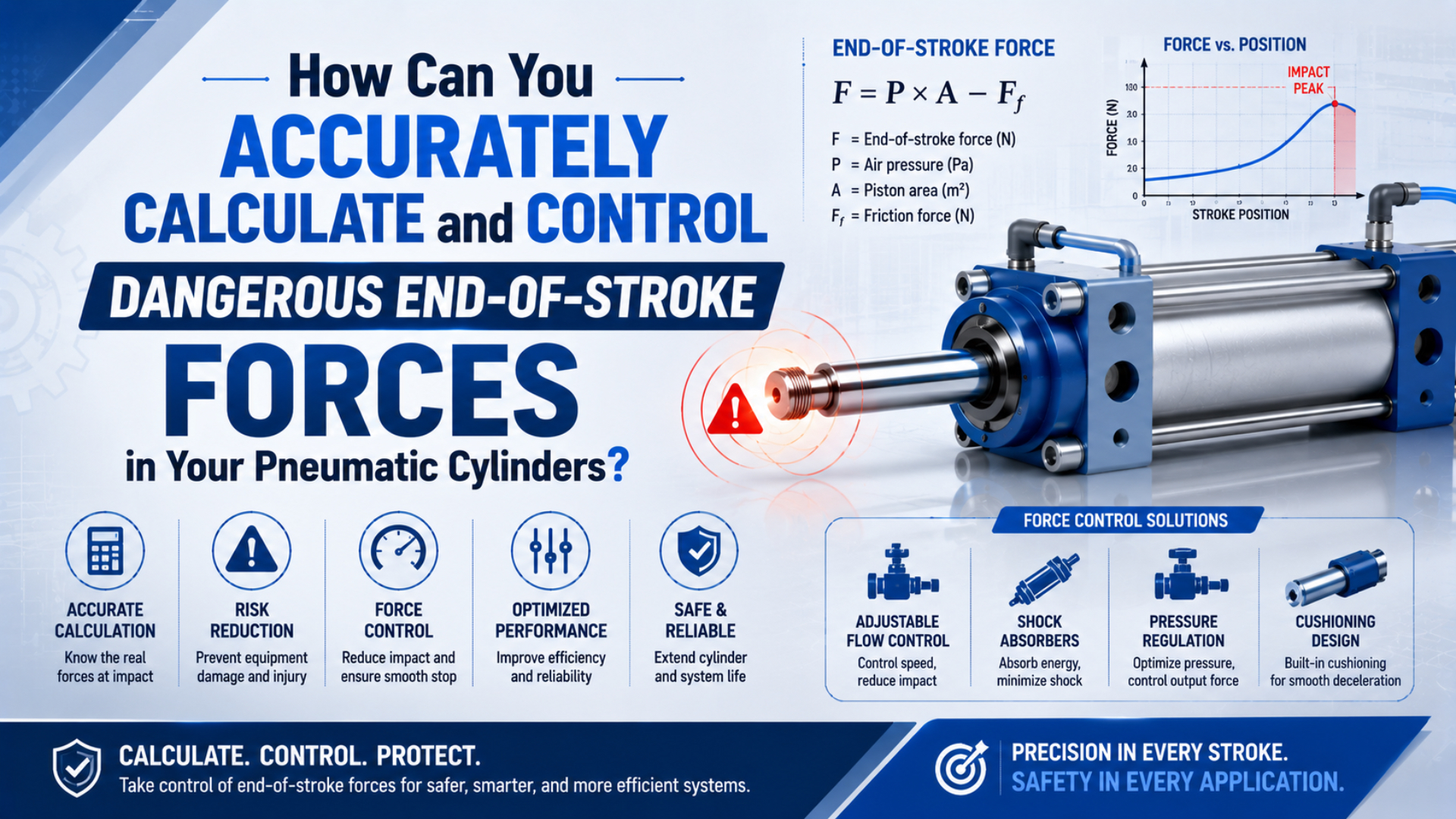
 How Can You Accurately Calculate and Control Dangerous End-of-Stroke Forces in Your Pneumatic Cylinders?Calculate pneumatic cylinder end-of-stroke energy, separate average from peak force, and apply Parker's 50% cushion-entry speed warning in machine design.
All Articles
Latest pneumatic selection notes
Use the newest Bepto Pneumatic articles to prepare better product questions, compare component options, and shorten technical review.
- How Can You Accurately Calculate and Control Dangerous End-of-Stroke Forces in Your Pneumatic Cylinders?Calculate pneumatic cylinder end-of-stroke energy, separate average from peak force, and apply Parker's 50% cushion-entry speed warning in machine design.
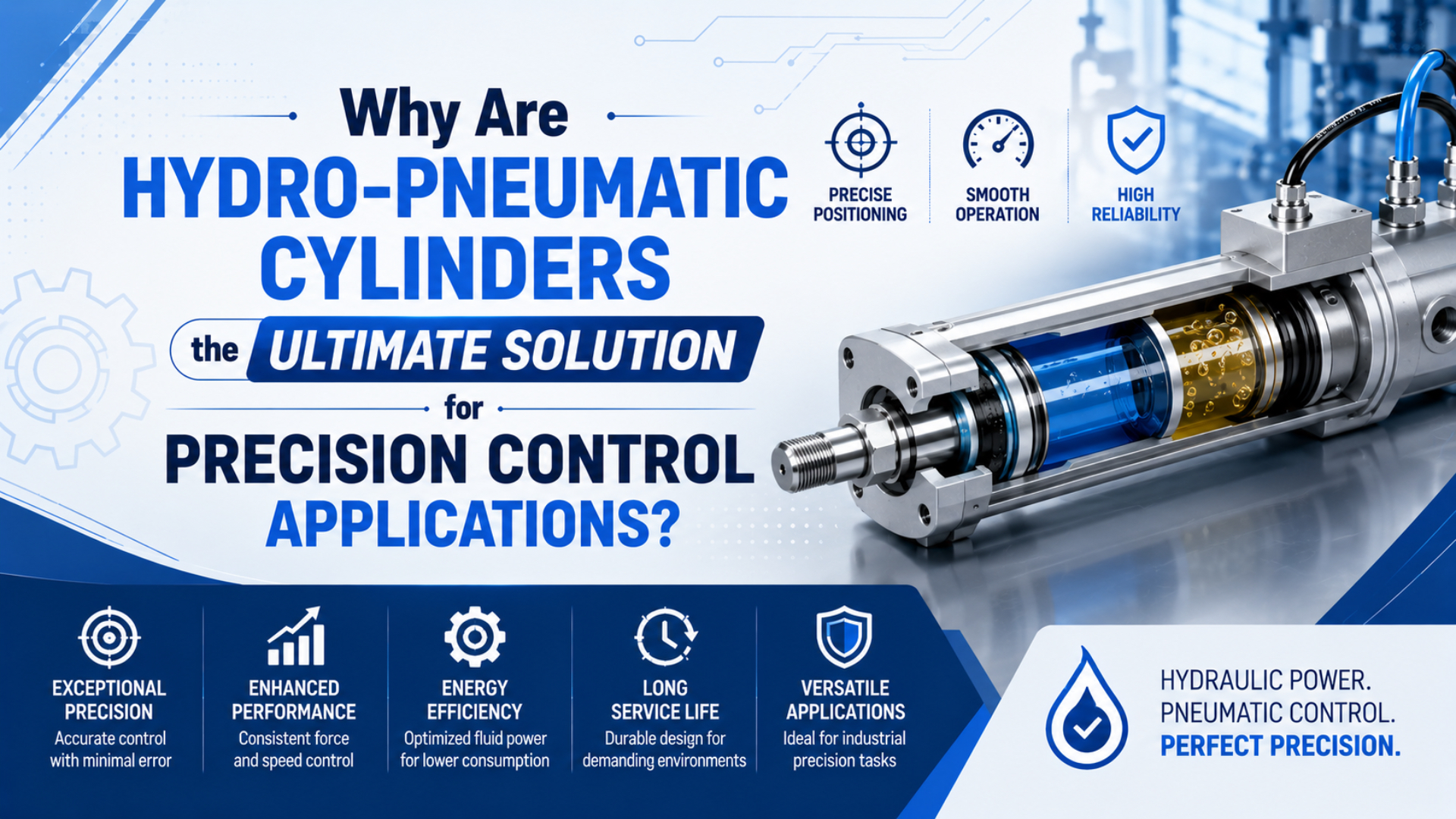 Why Are Hydro-Pneumatic Cylinders the Ultimate Solution for Precision Control Applications?Learn how hydro-pneumatic cylinders control feed speed or create a short high-force stroke, plus the sizing, safety, and RFQ checks that matter.
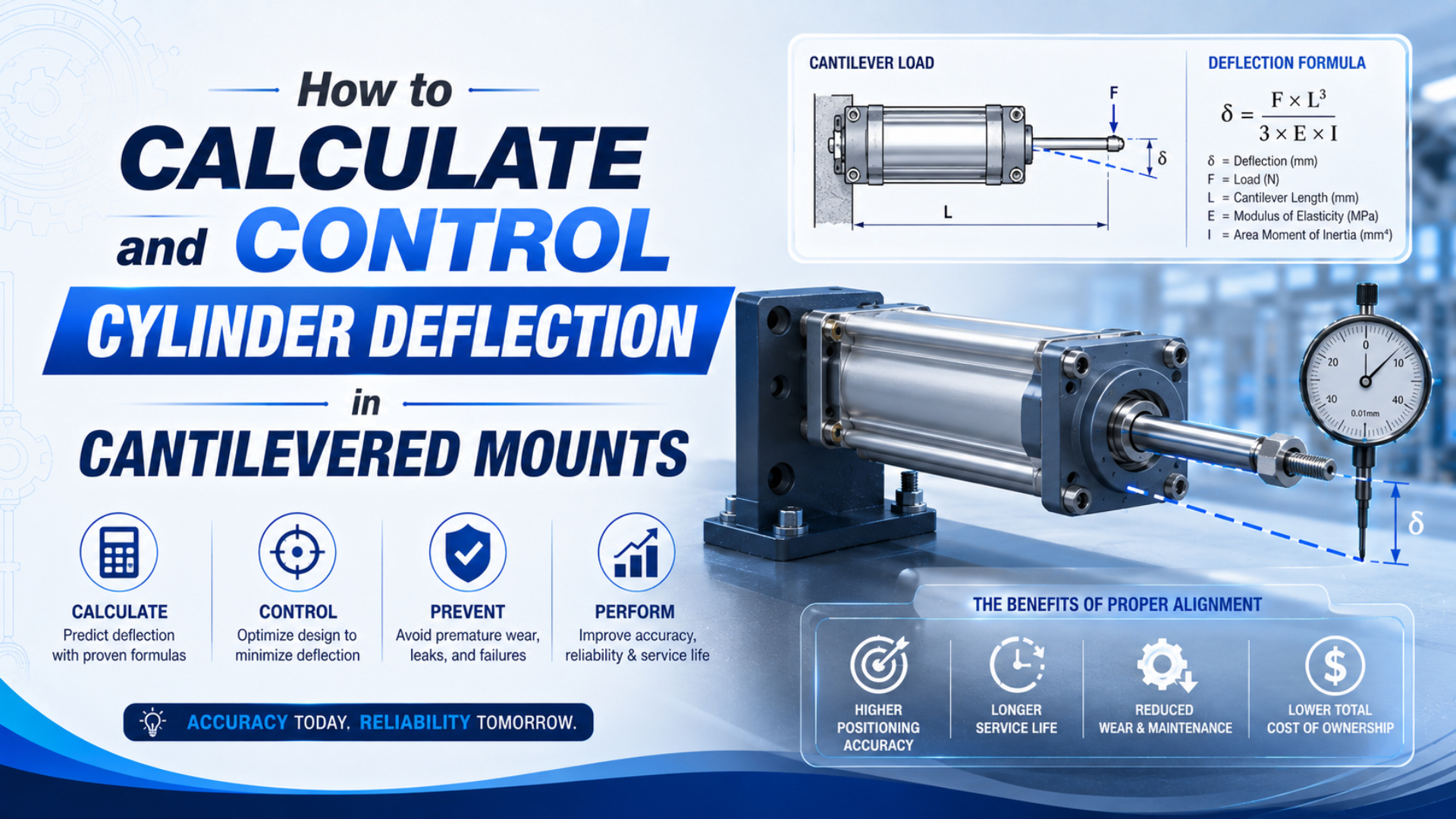 How to Calculate and Control Cylinder Deflection in Cantilevered MountsCalculate cantilevered cylinder-rod deflection with FL³/3EI, see why halving unsupported length cuts ideal deflection 87.5%, and select guides or supports.
 How Do You Properly Derate Pneumatic Cylinders for Reliable High-Altitude Performance?Learn why altitude does not automatically reduce cylinder force, how 6 bar gauge preserves thrust, and which high-altitude air-system checks matter most.
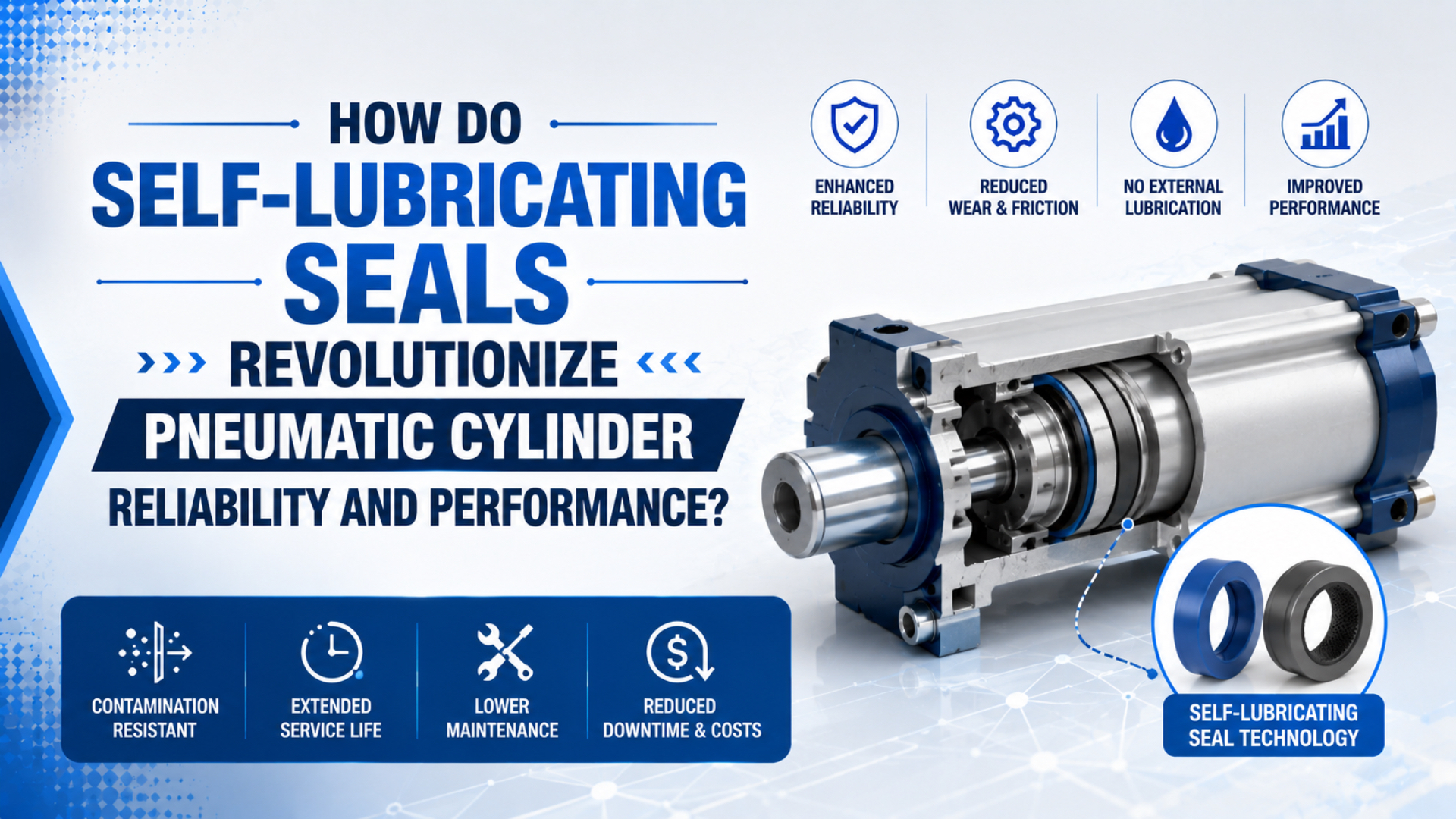 How Do Self-Lubricating Seals Revolutionize Pneumatic Cylinder Reliability and Performance?Learn how self-lubricating pneumatic cylinder seals use initial grease, when added oil changes maintenance, and how ISO 19973-3 validates service life.
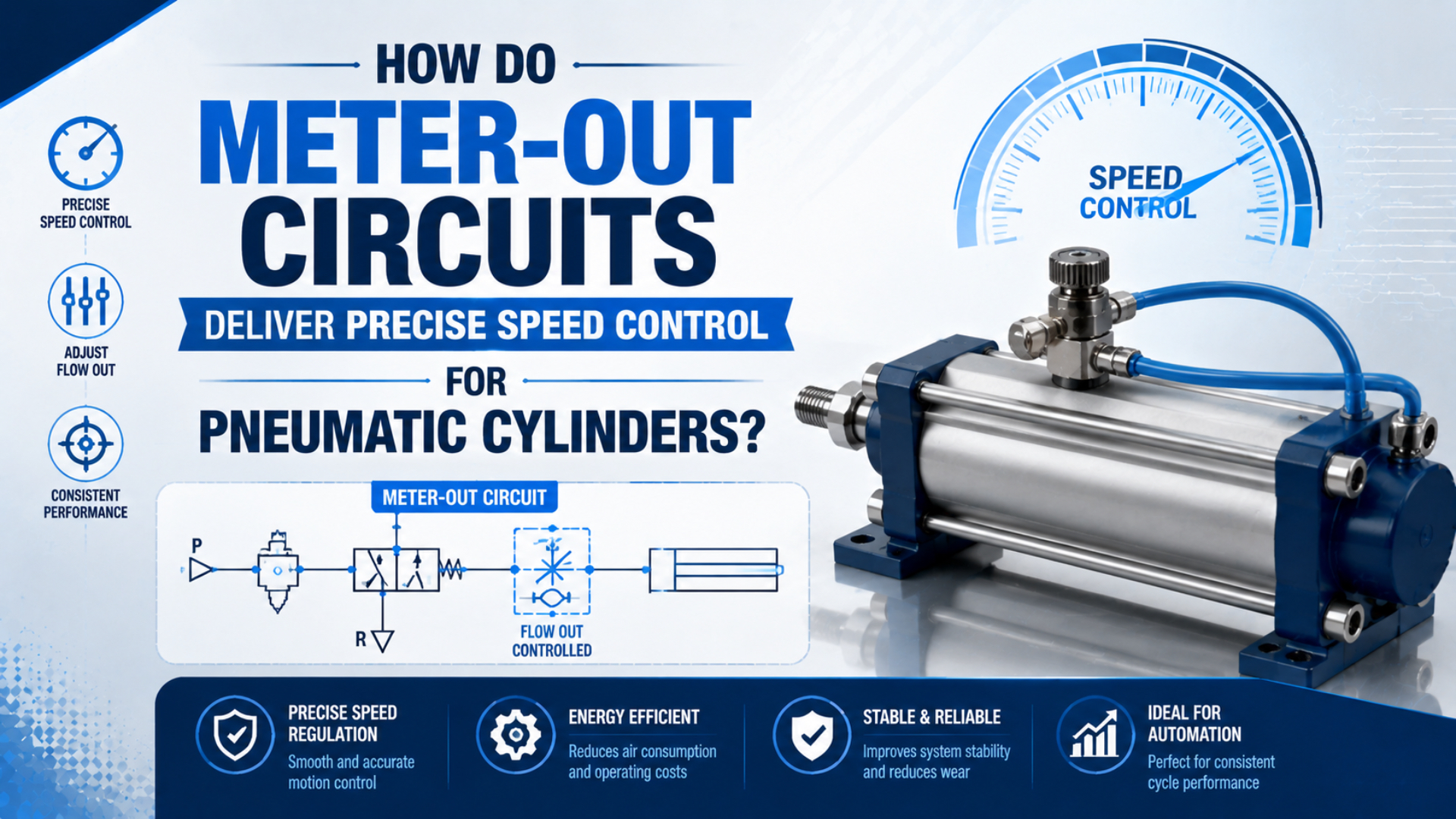 How Do Meter-Out Circuits Deliver Precise Speed Control for Pneumatic Cylinders?Learn how meter-out circuits control pneumatic cylinder speed through exhaust restriction, correct sizing, installation, tuning, and fault diagnosis.
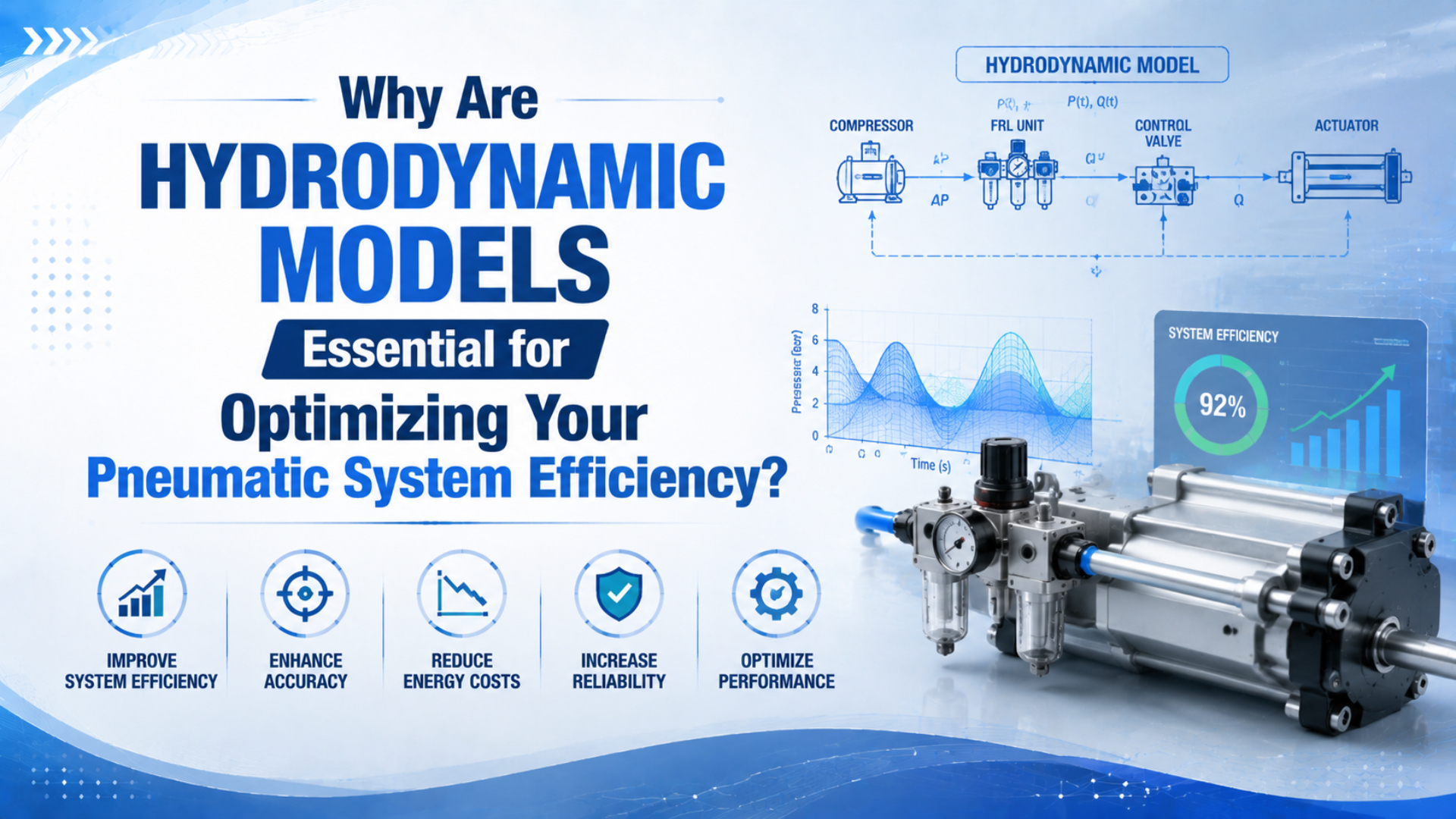 Why Are Hydrodynamic Models Essential for Optimizing Your Pneumatic System Efficiency?Choose pneumatic flow models using ISO 6358, pipe loss, transient mass balance, and CFD boundaries, then verify CAGI's 10% pressure-drop target in operation.
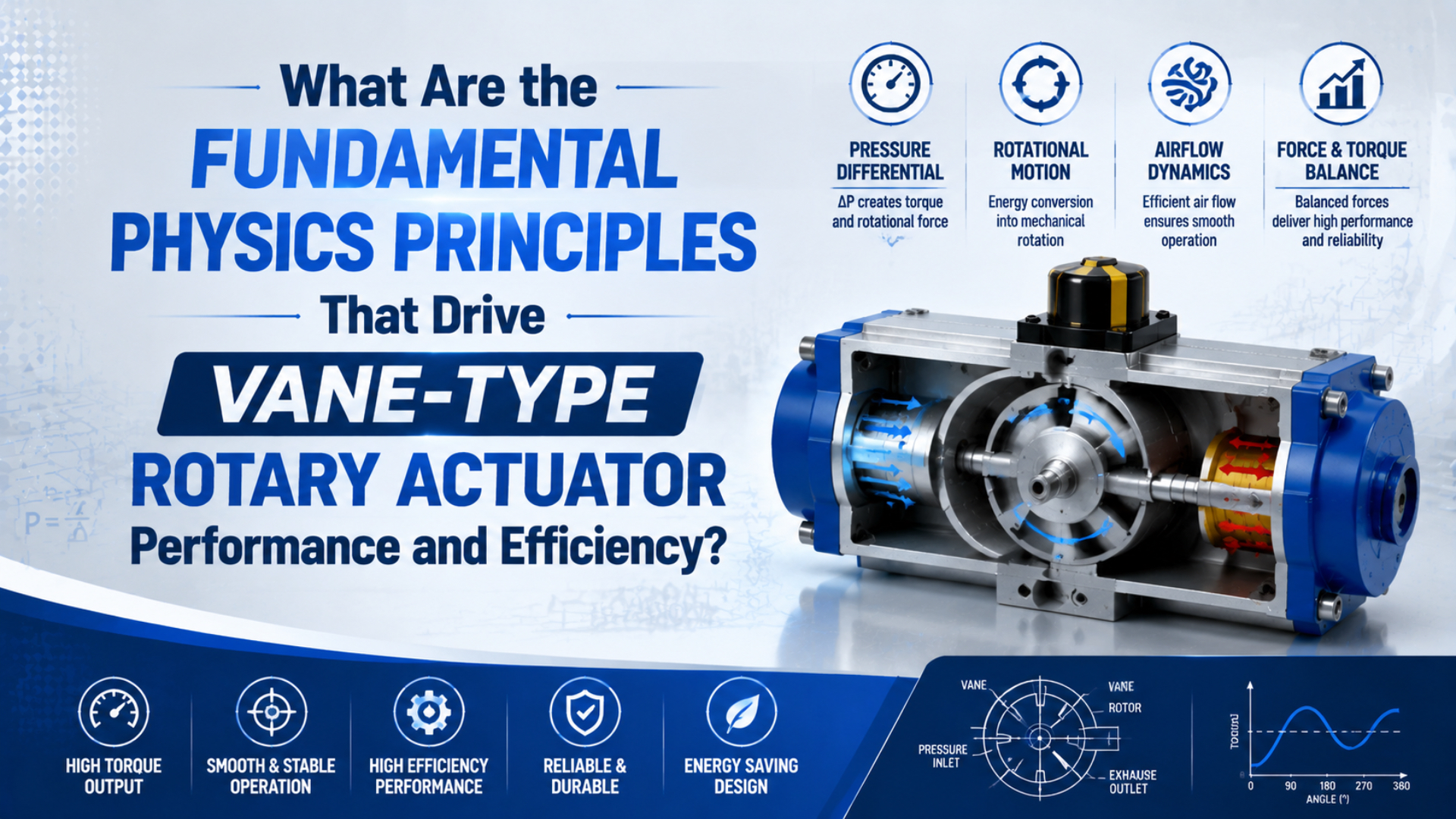 What Are the Fundamental Physics Principles That Drive Vane-Type Rotary Actuator Performance and Efficiency?Learn how pressure differential creates vane-actuator torque and how flow, inertia, leakage, friction, and stopping energy shape real performance.
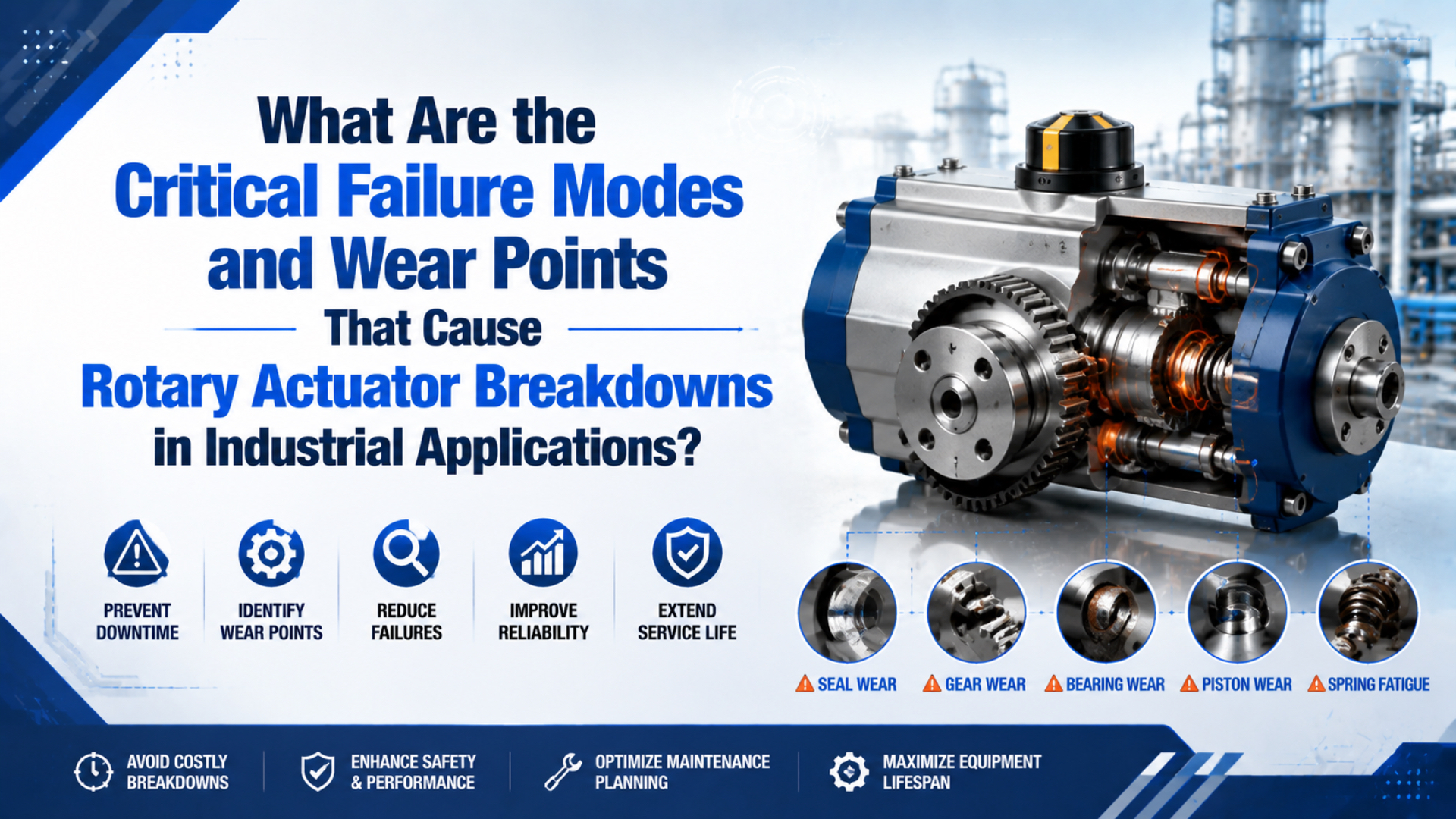 What Are the Critical Failure Modes and Wear Points That Cause Rotary Actuator Breakdowns in Industrial Applications?Diagnose rotary actuator breakdowns using SMC's 0.2-to-1 s/90° range plus seal, shaft-load, backlash, cushion, air-quality, and repair checks.